Ground investigation in Wolverhampton represents a critical first step in any construction or civil engineering project, providing essential data about the physical and chemical properties of the subsurface. This category encompasses a comprehensive suite of techniques designed to characterise soil, rock, and groundwater conditions, ranging from traditional boreholes and trial pits to advanced in-situ testing methods. For developers, engineers, and architects operating in the West Midlands, understanding what lies beneath the surface is not merely a regulatory checkbox—it is fundamental to designing safe, cost-effective foundations, assessing contamination risks, and ensuring long-term structural stability. The diverse industrial legacy and complex geology of Wolverhampton make professional site investigation indispensable for mitigating ground-related hazards.
The local geology of Wolverhampton presents a varied and challenging picture that directly influences the scope of any investigation. Much of the city is underlain by the Permo-Triassic sandstones of the Sherwood Sandstone Group, which form a major aquifer but can exhibit variable weathering and strength. Overlying these solid strata are extensive Quaternary deposits, including glacial till, glaciofluvial sands and gravels, and alluvium along the river corridors of the Smestow Brook and River Penk. These superficial materials can be highly heterogeneous, containing pockets of soft clay, loose sand, or buried channels that pose significant risks for differential settlement and slope instability. Furthermore, the area’s history of coal mining and heavy industry means that made ground, mine entries, and potential contamination are common considerations that a robust ground investigation must address.
In the UK, ground investigations are governed by a rigorous framework of standards and regulations, with British Standard BS 5930:2015+A1:2020 providing the primary code of practice for site investigation. This is complemented by Eurocode 7 (BS EN 1997-1 and -2), which establishes the principles for geotechnical design, including the specification and interpretation of ground investigations. For projects involving potentially contaminated land, an investigation must also align with the Environment Agency’s Land Contamination Risk Management (LCRM) guidance and BS 10175:2011+A2:2017. In Wolverhampton, where planning conditions frequently mandate a Phase 2 intrusive investigation following a desk study, compliance with these standards is essential for discharging planning conditions, securing building control approval, and satisfying the requirements of warranty providers like the NHBC.
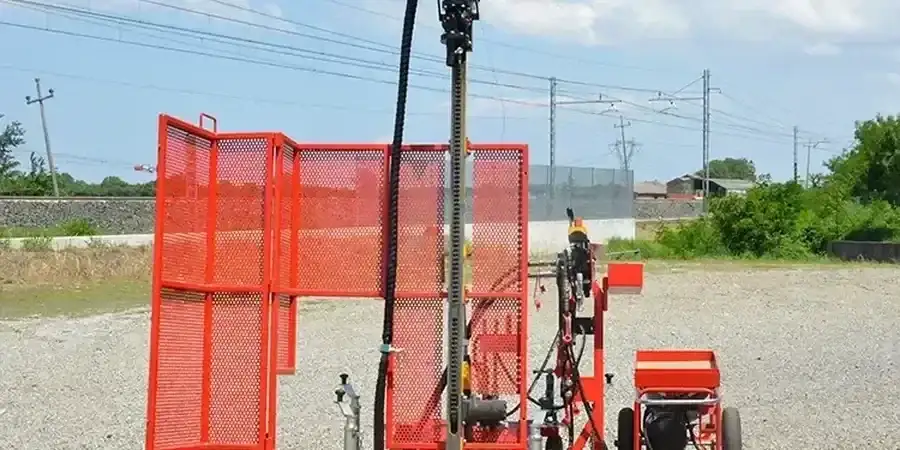
The types of projects that necessitate a comprehensive investigation in Wolverhampton are broad. Residential developments, from small-scale extensions to large housing estates, require an understanding of bearing capacity and ground aggressivity. Commercial and industrial schemes, particularly on brownfield sites in areas like Bilston or Wednesfield, demand rigorous assessment of contamination and ground gas. Infrastructure projects, including highway improvements and drainage works, rely on accurate ground profiling to design earthworks and pipelines. A key technique often deployed is the CPT (Cone Penetration Test), which provides a rapid, continuous profile of soil behaviour, proving invaluable for mapping soft clays or loose sands and for supplementing borehole data. This method, alongside dynamic probing and standard penetration tests, forms the backbone of a well-designed intrusive strategy tailored to the specific ground model of the site.
Available services
Common questions
What is the difference between a Phase 1 and Phase 2 ground investigation?
A Phase 1 investigation is a non-intrusive desk study that gathers historical, geological, and environmental data to develop a preliminary ground model and identify potential hazards. A Phase 2 investigation is an intrusive study involving physical sampling and testing, such as boreholes, trial pits, and CPTs, to verify the Phase 1 findings and obtain quantitative data on ground conditions for design.
When is a ground investigation required for a building project in Wolverhampton?
A ground investigation is typically required for most new-build projects, significant extensions, and any development on a known or suspected contaminated or unstable site. Wolverhampton's local planning authority will often condition a site investigation as part of planning permission, especially in areas with a history of mining or industrial use, to ensure safe development in accordance with BS 5930 and Eurocode 7.
How long does a typical site investigation take to complete?
The duration varies significantly with project scale and complexity. A simple investigation for a single house, involving a few trial pits, might be completed on-site in a day. A larger commercial project requiring multiple boreholes, laboratory testing, and a comprehensive interpretive report can take several weeks from initial mobilisation to final report delivery, with laboratory testing schedules often dictating the overall timeline.
What are the common ground-related problems found during investigations in Wolverhampton?
Common issues include the presence of made ground from historical industrial activity, shallow coal mine workings and associated mine entries, variable glacial till deposits, and contamination such as heavy metals or hydrocarbons on former factory sites. High groundwater levels or aggressive ground conditions that can attack buried concrete are also frequently identified and require special design measures.
Location and service area
We serve projects across Wolverhampton and surrounding areas.