In-situ testing forms the backbone of reliable geotechnical assessment in Wolverhampton, providing engineers with direct measurements of soil and rock properties without the disturbance that comes with sampling and laboratory work. This category encompasses a wide range of field-based investigations that evaluate ground conditions in their natural state, from density and strength to permeability and deformation characteristics. For a city with Wolverhampton's industrial heritage and ongoing regeneration, understanding what lies beneath the surface is not just good practice—it is essential for safe, cost-effective construction and infrastructure development.
The importance of in-situ testing in Wolverhampton is amplified by the region's complex and variable geology. Much of the city sits on the South Staffordshire Coalfield, underlain by Carboniferous Coal Measures comprising interbedded sandstones, siltstones, mudstones, and coal seams. These strata are often overlain by glacial till, sands, and gravels from the Quaternary period, creating a layered subsurface where ground conditions can change dramatically over short distances. The presence of historical mine workings, backfilled quarries, and industrial fill adds further complexity, making desk study alone insufficient. Direct field testing becomes critical to identify voids, assess compaction, and verify bearing capacity in areas where the ground has been significantly altered by human activity.
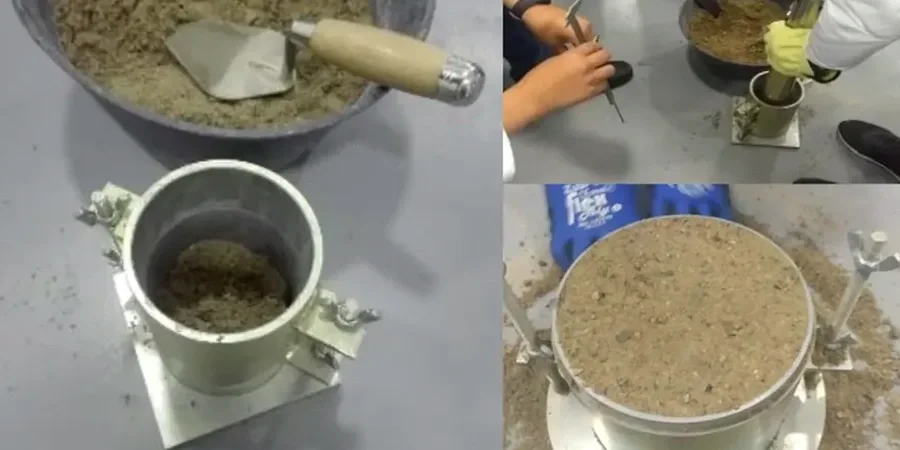
All in-situ testing carried out in Wolverhampton must comply with the relevant British and European standards that govern geotechnical investigation. The primary framework is BS 5930:2015+A1:2020, the code of practice for ground investigations, which sets out requirements for planning, execution, and reporting. Specific test methods are detailed in standards such as BS 1377 for soils, BS EN ISO 22476 for field testing, and BS EN 1997-2 (Eurocode 7) for the geotechnical design aspects of ground investigation. Adherence to these standards ensures that data collected is defensible, comparable, and suitable for use in design. Local authorities and the Coal Authority may also impose additional requirements, particularly where development encroaches on former mining areas or sensitive groundwater protection zones.
The range of projects requiring in-situ testing in Wolverhampton is broad, reflecting the city's mix of brownfield redevelopment, infrastructure upgrades, and new residential and commercial construction. Common applications include site investigations for foundation design, where tests like the field density test (sand cone method) verify compaction of engineered fill and trench backfill. Road and rail projects rely on plate bearing tests and dynamic cone penetrometer readings to assess subgrade stiffness. For larger structures, pressuremeter tests and standard penetration tests supply critical data on soil strength and deformability. Environmental assessments also benefit from in-situ permeability testing to model contaminant transport and design remediation strategies. Each project type demands a tailored suite of tests selected to address specific geotechnical questions and manage identified risks.
Available services
Common questions
What is the difference between in-situ testing and laboratory testing in geotechnics?
In-situ testing measures soil and rock properties directly in the ground, preserving natural stress states, moisture conditions, and fabric that are inevitably disturbed during sampling and transport. Laboratory tests on extracted samples supply controlled conditions and allow for a wider range of analyses, but the results may not fully represent field behaviour. The two approaches are complementary, with in-situ methods excelling where sampling is difficult or where undisturbed samples cannot be obtained.
When are in-situ tests required instead of relying on borehole logs alone?
In-situ tests become essential when borehole logs indicate variable or problematic ground, such as loose sands, soft clays, or fill materials where sample recovery is poor. They are also mandated by Eurocode 7 for certain design situations, particularly where ground strength parameters are critical to stability calculations. Projects in former mining areas like parts of Wolverhampton often require in-situ verification because historical maps and records may not accurately reflect current subsurface conditions.
How deep can in-situ testing typically be performed in Wolverhampton's ground conditions?
Test depths depend on the specific method and ground conditions. Standard penetration tests and cone penetration tests can reach depths of 30 to 50 metres or more, though the Coal Measures bedrock beneath Wolverhampton may limit penetration in some areas. Shallow tests such as sand cone density measurements and plate bearing tests typically operate within the top few metres, targeting engineered fill and foundation bearing strata. The presence of glacial boulders or mine workings can also influence achievable depths.
What qualifications should a company have to carry out in-situ testing in the UK?
Companies performing in-situ geotechnical testing should hold accreditation to UKAS-accredited standards where applicable, demonstrating compliance with BS 5930 and BS EN ISO 22476. Key personnel should have relevant geotechnical or engineering geology qualifications and demonstrable field background. For work in coal mining areas, familiarity with Coal Authority requirements is essential. Membership in bodies like the AGS (Association of Geotechnical and Geoenvironmental Specialists) provides additional assurance of quality and professionalism.
Location and service area
We serve projects across Wolverhampton and surrounding areas.